
Just two days after its release, streaming platform ZEE5 has pulled Satluj, a film based on the life of Sikh human rights activist Jaswant Singh Khalra, starring Diljit Dosanjh, from its catalogue in India.
The film, directed by Honey Trehan, was released on July 3 under the title Satluj after spending years in a certification dispute with India’s Central Board of Film Certification (CBFC). It was originally titled Punjab ’95.
In a statement on Sunday, the platform said the film will remain unavailable in India till further notice “in light of the current developments”. It also said that it was exploring legal options to bring the film back to audiences in India and reiterated its support for the filmmakers and their creative vision.
ZEE5 did not disclose the reasons behind the decision.
Jaswant Singh Khalra was a prominent human rights defender who investigated alleged human rights violations, including enforced disappearances and secret cremations allegedly involving Punjab Police personnel. On September 6, 1995, he was allegedly abducted from outside his home in Amritsar. Several Punjab Police personnel were later convicted in connection with Khalra’s abduction and murder.
In a 2005 letter to the National Human Rights Commission (NHRC) of India, Human Rights Watch said Khalra’s investigations revealed that security forces had abducted, extrajudicially executed and secretly cremated thousands of Sikhs in Punjab between 1984 and 1994. The rights group said Khalra documented more than 2,000 secret cremations in Amritsar district alone and that subsequent investigations by human rights organisations found similar practices across Punjab.
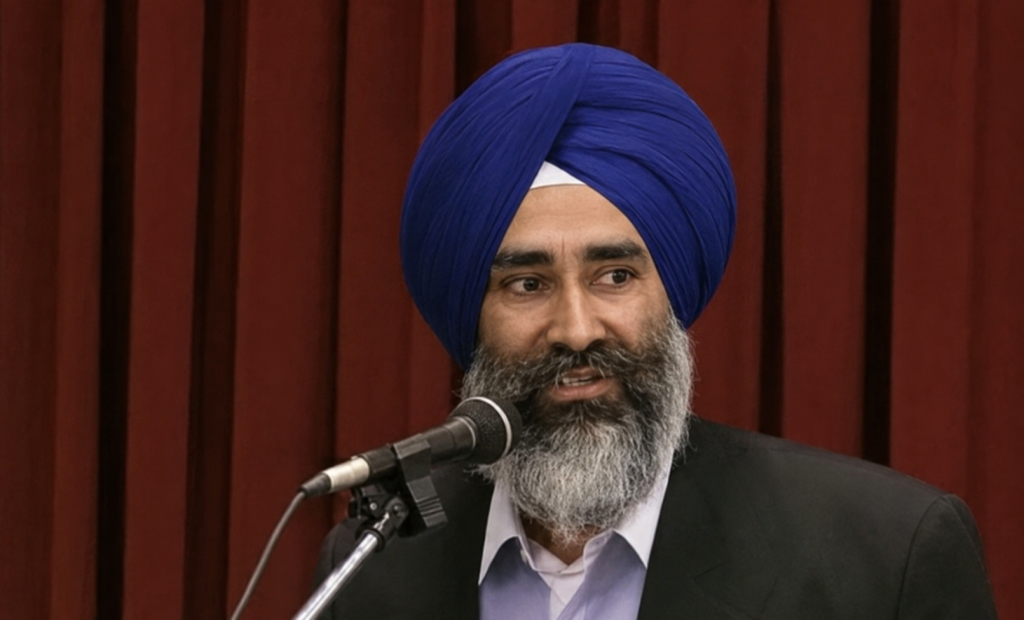
The Film About the Disappeared Has Been Made to Disappear
The film’s removal has renewed debate over censorship and freedom of expression in India, with social media users questioning why a film that had finally secured a release was withdrawn within days.
Reacting to the film’s removal, Ex. Jathedar Sri Akaal Takhat Sahib, Giani Harpreet Singh said Sutlej (Punjab ’95) sought to shed light on a period in Punjab’s history during which, he said, serious human rights violations occurred and Sikh youth were targeted in alleged fake police encounters. He called for the restrictions on the film to be lifted and urged the Indian government to establish an independent Truth and Reconciliation Commission to investigate alleged fake encounters, enforced disappearances and other human rights violations during that period.
Punjab opposition legislator Sukhpal Singh Khaira strongly condemned the removal of Satluj, saying the film depicts what he described as police brutality in the abduction and “elimination” of Jaswant Singh Khalra in 1995. Khaira said the film was based on “true facts” that were upheld by the Supreme Court while convicting the guilty police officers. He urged the Government of India to restore the film on the streaming platform immediately.
Another politician from Punjab commented that he was “shocked and saddened” by the film’s removal, calling it “an assault on our collective memory, truth, and freedom of expression.” He said Punjab deserved to confront its past “with honesty, not suppression.”
In an Instagram post, actor and singer Diljit Dosanjh appeared to criticise the film’s removal, writing, “#IChallengeTheDarkness 🪔 Shaheed Jaswant Singh Khalra Ji 🙏🏽 #Panjab95 SATLUJ Naal V Oh Hee Hoyea Jo Khalra Saab Naal Hoyea c.” The Punjabi phrase translates to, “The same thing has happened to Satluj as happened to Khalra Sahib,” suggesting a parallel between the film’s removal and the obstacles faced by the late human rights activist.
In another post, Diljit Dosanjh shared a video showing people in a village watching the film and wrote, “Hun Ni Rukni Film. Khalra Saab Di Avaaz Nu Koi Ni Dabaa Sakda,” which translates to, “The film will not be stopped now. No one can silence Khalra Sahib’s voice.”
Before the film was removed, he had also hinted that it could be taken down.
Comedian Kunal Kamra criticised the film’s removal, saying it amounted to “Jaswant Singh Khalra abducted again, this time by the CBFC.” He also questioned why the film had previously been asked to undergo 127 cuts and called for greater transparency in the censorship process.
Filmmaker Ram Gopal Varma described SATLUJ as “not a film, but a deep wound that will never heal” in a post on X. He wrote that SATLUJ “is a film that has to be seen, shown, discussed, debated and not encountered like the victims in the film.” He also appealed to those in power not to do to the film what, he said, had been done to Jaswant Singh Khalra.
Family had hailed film’s OTT debut
Before the film was removed, Paramjit Kaur Khalra, the wife of slain human rights activist Jaswant Singh Khalra, welcomed its release on the streaming platform. She had said it would bring the story of her husband’s life, struggle and legal battle to audiences worldwide after the film overcame years of political obstacles and numerous challenges.
Paramjit Kaur Khalra said it was important that her husband’s pursuit of truth, justice and the protection of human rights, as well as what the family described as the “genocide of the Sikhs,” be portrayed honestly and “without compromise or distortion.”
The statement thanked director Honey Trehan for remaining “steadfast in his principles” and refusing to compromise the film’s artistic and historical integrity. It said the film authentically portrays “the painful truth of more than 25,000 unclaimed bodies” as well as Khalra’s legal struggle to bring the truth of the Sikh community before the world. It added that preserving the film’s original spirit was its deepest appreciation of his work.
Paramjit Kaur Khalra had expressed hope that the film would serve as a fitting tribute to her husband’s legacy and inspire audiences around the world to reflect on and uphold the values of truth, justice, accountability and human dignity.
Note: This story has been updated with the latest available information.
